The 2020 Democratic Presidential
primaries have been a whirl-wind of events and unprecedent turning of support like
we have rarely seen before. The Senator from Vermont, Bernie Sanders, barely lost
in a close race to eventual nominee Hillary Clinton, who then lost to
Republican Nominee Donald Trump in the general election. This was a crushing
defeat for the Vermont Senator who had rallied a tremendous amount of grass
roots support and had seemingly been cheated out of a nomination from rules
favoring Senator Clinton from the Democratic National Committee. Bernie Sanders
seemed determined to not make the same mistakes again in 2020 and was leading
the charge for the nomination early out of the gate, by winning Iowa, New Hampshire, and Nevada. In all of
those races, the former Vice President Joe Biden was receiving support in the
single digits. That is until the South Carolina Primary was held on February 29th.
Biden received a tremendous 48.7% of the vote with the 2nd place
Sanders receiving just 19.8%. Following this win we saw a rallying electorate
with major candidates dropping out and Biden receiving a huge boost. Pete
Buttigieg dropped out and endorsed Biden, as well as Amy Klobuchar and Andrew
Yang. The next string of victors for Biden would come during Super Tuesday when
he would win a staggering 10 states, to Bernie Sanders 4. This would lead to
Michael Bloomberg and Elizabeth Warren dropping out. Bloomberg would then
endorse Joe Biden. Finally, on March 10th Biden would then win 5 out
of 6 states, surely securing his path to the nomination.
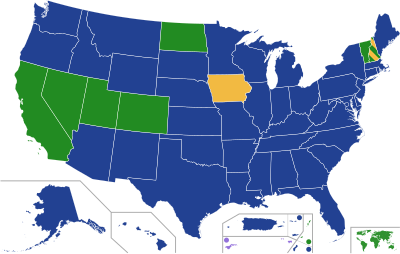
What we witnessed first hand was an
example of partisan mobilization in the Democratic party. Walter Veit stated: "economics,
psychology, and political science describes the 'bandwagon effect' - or
alternatively 'contagion effect' - as a general cultural phenomenon or bias in
which the rate at which the spread of ideas, behaviour, and trends more
generally, rises with the rate of others adopting the trend.” Many scientists
and psychologists have weighed in on why Joe Biden is now winning the
nomination. A further trend that is occurring, especially with candidates
endorsing Biden is the bandwagon effect. Veit continues to elaborate on this by
saying “For Democrats, especially the moderates among them, there was a
consolidation problem in deciding who to endorse. In a field with progressives
such as Bernie Sanders and Elizabeth Warren, moderate Democrats were scrambling
for votes amongst each other. The victory of Joe Biden in the South Carolina
Democratic primary sent a signal for all the others to unify behind him. Had
this decisive victory gone to any other of the moderate candidates we might be
looking at a very different field now. It thus need not be a sign of the
quality of Biden's candidacy, but rather an instance of the Bandwagon Effect.
An easy analogy suggests itself from the success and failure of restaurants
that might be based entirely based on chance, rather than their quality.”

The bandwagon effect and political
mobilization of voters was seen in 2016 with Republicans and Trump. At a certain
point in the campaign several big name Republican candidates dropped out and
endorsed Trump and campaigned for him, name Chris Christie and Ben Carson. This
type of bandwagoning is an interesting concept to study and analyze on when
candidates decide its time and how they decide who to support. This year, it
appeared to be after South Carolina and the candidate was Joe Biden.

No comments:
Post a Comment