Wednesday, July 15, 2020

Social Identity Theory: The Mobilization of the Minority Vote

Overview of Current Event

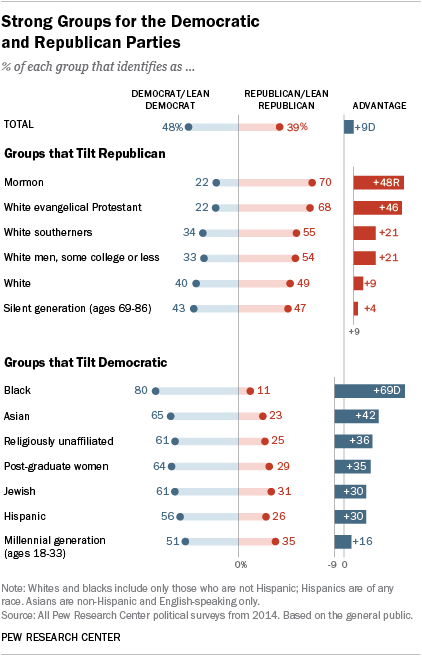
During the previous three months, the deaths of Ahmaud Arbery and Geroge Floyd have re-highlighted what some consider, the prevalent problem of systemic racism and equality towards Black Americans in the United States. Per Figure 1, the use of #BlackLivesMatter on the Twitter platform reached an all-time high, which substantiates that a significant portion of the public perceives racial and equality issues to (1) exist, and (2) hinder Blacks and other racial minority groups from obtaining appropriate levels of inalienable rights and opportunity. Moreover, the salience of race relations and associated discussions of equality (for all U.S. citizens - regardless of age, race, gender, and sexual orientation) has increased substantially across all media and news outlets. In addition, these issues have become largely politicized, stemming from their heavy coverage during political campaigns and debates preceding the 2020 general election. For any change which directly affects the rights and freedoms of U.S. citizens to ensue, the mechanism by which adjustments are made is through legislation and collective action of both (1) the government, and on a broader scale, (2) the public. Therefore, these recent events, coupled with the urgency of the upcoming November general election, have initiated political parties to re-affirm their subjective attitudes and policy platforms to address such dilemmas. Fortunately for the Democrat Party, most racial minority groups largely identify as Democrats; as such, the party may mobilize a significant portion of their 2020 voter constituency to rally around race and equality problems (Figure 2).
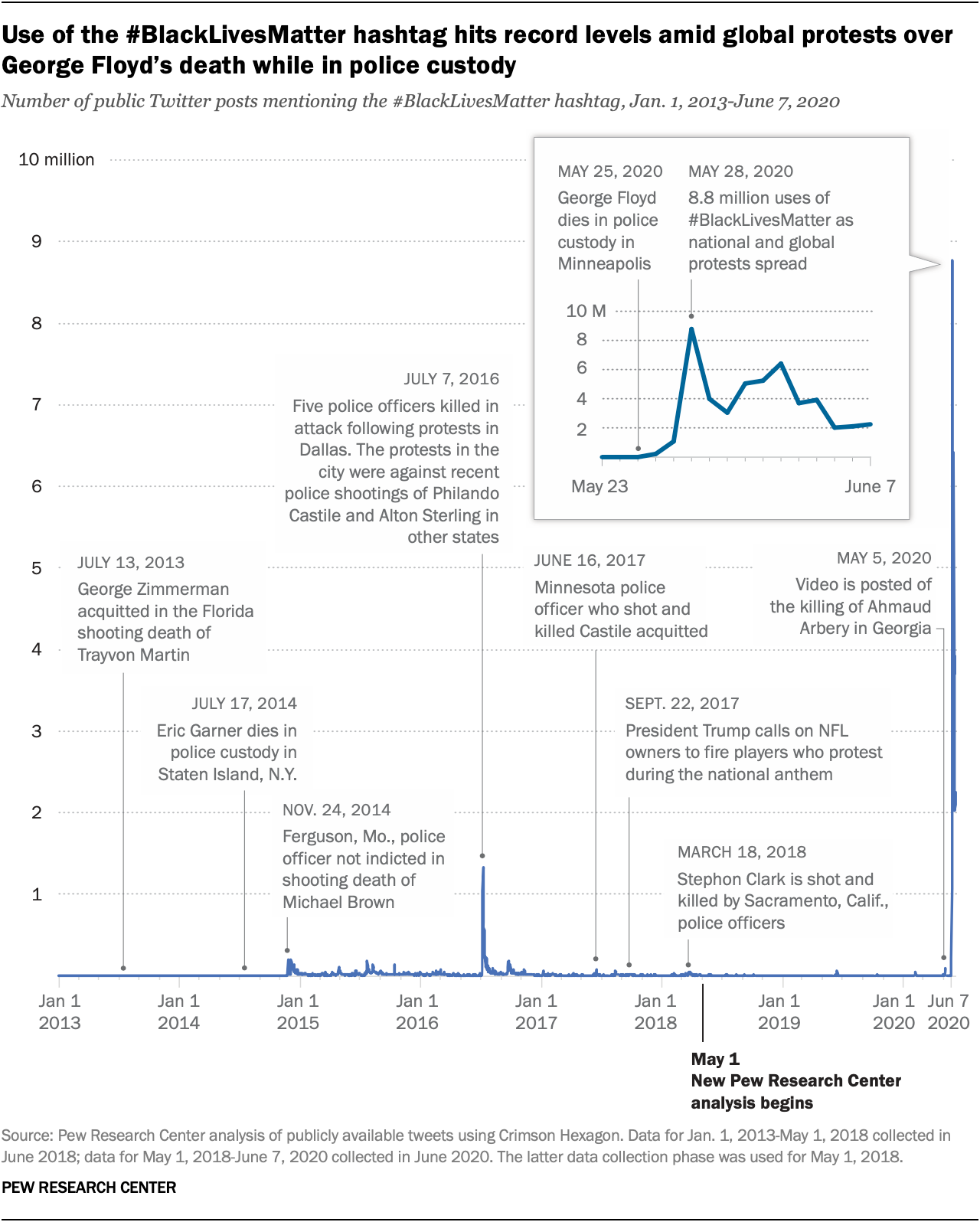
Figure 1
Figure 2 

Social Identity Theory

In a 2017 publication, Leonie Huddy and Alexa Bankert introduce a social identity theory of partisanship: the expressive approach. The expressive approach is stated as the "enduring identity strengthened by social affiliations to gender, religious, or ethnic and racial groups". Meanwhile, the cognitive underpinnings of this expressive approach are confirmed by the foundational social categorization theory, where individuals in groups are aligned and associated with certain "group stereotypes". Huddy and Bankert argue that as individuals acknowledge and internalize their social group assimilations and stereotypes, they will then naturally generate more social bias and a greater political proclivity to "increase their party’s chances of electoral victory and boost its status". Meanwhile, in-group bias and associations are most strong when certain events propagate strong negative and positive emotions in individuals. While the causal relationship between the internalization of social identity and political action is clear, the theory is not standard for all individuals. Accordingly, some individuals may simply not care for politics, while others do not connect political party identification and action with the expressive approach of social identity and in-group bias. On the contrary, the instrumental approach (where individuals make rational political choices based on a  number of variables: party and candidate performance, policy platform, presidential approval, and economic performance) provides an alternative for individuals to make political choices not fully motivated by group identity theories and stereotypes. Finally, Huddy and Bankert suggest that a candidate-centered electoral system (as found in the United States) allows party-elites, political candidates, and political parties to disproportionately control the public perception of social stereotypes and their in-group bias, pertaining to party affiliation. As a result, because political parties (and their constituency) seek to win elections and ensure party success, they will mobilize their electorate by helping individuals make connections between their social identities and associated stereotypical political action and identifications, particularly in election years.

Democrat Mobilization of the Minority Vote

Upon the reflection of recent racial and social justice events and protests, (which have propagated strong negative emotions in individuals with pre-determined social in-group minority bias) as well as our understanding of the expressive approach to social identity, the connection is clearly understood that the Democrat party has mobilized, and will continue to mobilize their staunch minority constituency to campaign for social justice and equality ahead of the 2020 General Election, particularly among the Black community. Whether this method of electoral mobilization is ethical or effective is neither here nor there, it certainly highlights the manner in which political parties use social in-group identifications to mobilize their specific electoral base. Huddy and Bankert also suggest that "the electoral effect of group loyalties is most pronounced among African Americans who identify with both the Democratic Party and their racial group". As an example, Lebron James, a prominent Black American, social justice activist, and strong supporter of the Democrat party, is fervently attempting to mobilize minority constituencies to make changes in the upcoming November election (New York Times Reference). From this perspective, prototypical group members and party-elites (Barack Obama and LeBron James) help to establish the social in-group connection with strong partisan tendencies and actions. 

References:


When Issue Framing Fails

Donald Trump has been falling in the polls and as a result he has gone on the offensive. He has tried to attack Joe Biden on a variety of fronts but his efforts have not been successful (https://www.nbcnews.com/politics/2020-election/difficult-attack-vanilla-trump-s-throwing-everything-biden-nothing-sticks-n1233097).  Trump has attacked Biden on three main fronts: he will be a tool of the radical left, he is not mentally capable of being president, and he was not the man to handle foreign policy with China. The issue is that none of these attacks have been effective. The Democratic primary centered on the question of whether Biden was in touch enough with his selectorate to be a good representative of the party and the voters thought he was. The voters also believe that he is just as mentally capable as Trump. They also believe he would handle China better than Trump did (https://www.nbcnews.com/politics/2020-election/difficult-attack-vanilla-trump-s-throwing-everything-biden-nothing-sticks-n1233097).  The result of these failed attacks is the Trump is losing popularity and Biden is growing in it. Trump has failed to properly lead his party in an effort to paint Biden as something that is unconscionable. Biden is winning this battle and it is a result of a failing of Trump and the Republican Party. 


I believe the issue that plagues Trump and the Republican Party as a whole is a failure to function effectively as a party. A political party functions as peak effectiveness when it is able to frame the issues to fit the party platform. Parties frame issues with the rhetoric they use in speeches and in advertising to shape the way that the electorate feels about a specific issue. The electorate in America is not usually politically engaged and so it must look to the parties to direct their thoughts. In this specific case Trump and the Republican Party are required to set the party’s feelings about Biden. The party has not been able to and thusly have failed in this key function. The party has failed because the attacks and attempts that Trump tries to make have not stuck. Trump’s modus operandi of name-calling and fear mongering has failed to give the party proper direction as to how they should feel about Biden. The gaps in the Biden campaign are similar to the gaps in Trump’s. They are both old, they are both white, and they are both men. The party is not able to use their attacks to properly frame Biden as something that must be opposed at all cost. That has left the party open for dissent. 


The results of the failure for Donald Trump and the Republican Party can be seen as the growth of support for the opposition. The party has failed to create a cohesive image of the opposition and that has increased the number of dissenters from the party. The number of party members that do not approve of Trump has increased the closer we have been getting to the election (https://www.washingtonpost.com/politics/2020/06/17/not-only-is-trumps-approval-with-republicans-not-96-percent-energy-appears-be-slipping/). There are other effects that have been caused by the inability of the Republican Party to properly frame the issues for the party as a whole. The Democrat Party have been able to surge in Congressional elections and in state races as a result of the Trump presidency (https://www.npr.org/2020/07/01/885878543/progressive-democrats-gain-influence-in-congressional-races). We have also seen a raise in the number of Republican candidates that are challenging the incumbents based on anti-Trump platforms (https://ballotpedia.org/United_States_Senate_Republican_Party_primaries,_2020). Both of these measures depict a party that is failing to properly frame the issues and to set a good platform. The Republican Party is without solid direction from the head of the party and therefore dissent and fracturing are bound to occur.

Word count: 603

Controversial Comments - How Assumptions About Race Play Out in the Media


On May 22nd, former Vice President and presumptive Democratic nominee for President Joe Biden participated in an interview on “The Breakfast Club” where he responded to a question from co-host Charlamagne tha God that, “If you have a problem figuring out whether you’re for me or Trump, then you ain’t black.” Only a few hours later, he took back these remarks and apologized, acknowledging that in this interview and in this phrase specifically, he had been “much too cavalier.” Vice President Biden’s remarks were preceded by almost 20 minutes of listing off his accolades and accomplishments (and the goals he has should he win the 2020 Presidential election) in areas where Trump has sorely lacked: prison reform, initiatives for city improvement for low-income communities and communities of color, decriminalizing weed, and putting more funding into Black communities specifically. Why then, did so many people respond so negatively to this interview and Biden’s remarks? Outside of its racist connotations, the key to understanding his controversial remark and the widespread responses to it can be found in the concept of “social sorting” used by Mason (2016) and Mason and Wronski (2018) in their article One Tribe to Bind Them All: How Our Social Group Attachments Strengthen Partisanship.
Social sorting, as used in these articles, describes the natural and organic nature of humans to sort themselves into groups where their “social identities grow increasingly aligned with a partisan identity” thereby reducing the amount of social cross-pressures on their political behavior (Mason and Wronski 257). Essentially, individuals will naturally gravitate towards the political party that their identity (race, religion, ideology) best fits within. Thus, the majority of white, Christian, conservatives are Republican and the majority of Black, Latinx, etc., atheists (or members of other religions) who are liberal are Democrats. Additionally, as these racial, religious, and ideological identities have become more tightly aligned with partisan identities in the recent years, Americans have become increasingly more tied to their parties of choice as the psychological effects of adopting partisanship has become almost as strong as any of the first three identity markers. This phenomenon clues us in as to why Biden made his remarks in the first place.
VP Biden is a career politician with a clear voting record of work that benefits Black communities. Among his other accomplishments, he stated that, “I extended the Voting Rights [Act] 25 years. I have a record that is second-to-none…The NAACP’s endorsed me every time I’ve run. I mean, come on. Take a look at the record.” Clearly, Biden feels as if he has done the work throughout his entire career to secure the Black and African American vote in this upcoming election and was drawing from the fact that through social sorting, we can infer that a large majority of Black and African American voters are liberals who vote for Democratic candidates. One prominent critic of his comment was a former spokeswoman for the Bernie Sanders presidential campaign, Briahna Joy Gray who tweeted that his comment was “the natural consequence of the reductive view of race & politics being pushed by the ‘identity is destiny’ crowd.” Her comment showed that Biden was drawing from this phenomenon of social sorting in a reductive and harmful way by pitting Black peoples’ blackness against their ideologies and forcing them to choose the one that seems most politically beneficial, and in this case it is their blackness and the accompanying vote for him. Her comment pointed out the fact that just because someone is Black or African American does not necessarily mean that they are also liberal and a Democrat. By looking past the data and into real life, making these sweeping judgments about what people believe politically and ideologically can be reductive and actually diminish the affect politicians can have on communities of color if they don’t actually try to get to know their specific needs.

Joe Biden APOLOGIZES for telling radio host Charlamagne tha God ...
Charlamagne tha God with former VP Biden on "The Breakfast Club"
Charlamagne tha God responded to Biden’s remark by saying, “It doesn’t have nothing to do with Trump, it has to do with the fact – I want something for my community.” His comment points to the fact that, although recent trends and the available data may say that Black communities are overwhelmingly liberal and Democratic, knowledgeable voters such as himself want something more than party affiliation—they want solid support and reasonable change from the politician holding the highest office in the land, regardless of which party they come from. VP Biden assumed, at least for a moment, that he should have the full support of every Black and African American voter just because they are Black or African American (and thus should also be a liberal who votes for Democrats). This idea stems from the idea of social sorting and the intense affect it has on our democratic process and the politicians who seek to learn the system in order to get enough support to win major elections.  

Tuesday, July 14, 2020

Trump or Biden? 2020 Elections

We have all heard about how important it is to choose the candidates on whom we intend to trust our vote, after all, they are primarily responsible for the future of our country in the coming years. But how to make that choice? How to decide between two candidates? We know that it is not such a simple process. So I have selected some criteria that should be taken into account when you choose your vote.
Your political side shouldn’t be your primary reason to vote for Trump or Biden. I mean that is it not because you consider yourself conservative that you have to vote for Trump, or because you are liberal that you have to vote for Biden. A recent poll performed by The Hill, one of the most influential US political websites, shows that 33% of voters favor voting strictly by party, rather than a candidate. One in every three people is a very significant number. If you are one of these people who chose a party over a candidate here are some suggestions on how to make that choice from now one.


1) SEARCH PERSONAL HISTORY
The first thing to do is to get as much information about your possible candidate as possible. All that is needed is a simple search service, such as Google, which is already a very practical way of obtaining the necessary information. It is necessary to know how to choose good sources that bring reliable information. Give preference to the official websites or pages of the most popular media. Try to find out about the candidate's personal and professional background, his ethical posture, and the way he relates to society. This is a path that will help you to discover if the uttered speech really matches his performance in other moments of his life, outside the electoral period.

2) SEARCH THE POLITICAL HISTORY
In many cases, the candidate in these elections holds or has already held a parliamentary role. This is a very important point since in order to find out if your candidate will do a good job there is nothing better than finding out how he performed the job previously. If your candidate has held a legislative position, see if he was an absent parliamentarian, missing many sessions, what projects he presented, how he voted for other projects, especially the most controversial ones. If the candidate held a position in the executive branch, analyze what investments he made, whether they were well-executed, how public money was used in his management, and how opinion polls evaluated him, whether with a high or low approval rating.

3) SEEK THINKING AFFINITY
Another important factor is that your candidate has the same values as you, that they share your ideological point of view. Remember that he will be your representative, so it is essential that you defend the same causes. So, before voting, think about what you would like to see put into practice, and choose someone who has the same priorities.

4) KNOW THE PROPOSALS
Proposals must be possible to carry out, well prepared and it is necessary to state which mechanisms will be used to put the projects into practice, informing where the funds will be allocated for their execution. Typically, candidates make their ideas available on their social networks and websites. Through these means, as well as campaign acts, it is possible for you to question them on topics that are of interest to you. When asking your questions, note whether the candidate provides generic answers and whether he evades controversial issues.

When elected, the winning candidate will be the one to make decisions and govern the country, not the political party. It is not because your candidate is a liberal or a conservative that you will agree on every idea and beliefs you have. By voting based on the requirements discussed above, it is more likely that you will be making the right decision.


Why the Selectorate Matters: The "Closed" Primary in Utah

One function of political parties is to nominate candidates for political office. The Utah Republican party recently nominated its candidate for governor in the 2020 election after a narrow primary race. The field was split between four candidates: former governor and ambassador Jon Huntsman Jr., current lieutenant governor Spencer Cox, former speaker of the Utah House Greg Hughes, and businessman Thomas Wright. This was a significant race, being the first open governor’s race in Utah since 1992. It was also significant because of the unprecedented swelling of members in the Utah Republican Party in the weeks just before the primary. At the deadline for switching parties near the end of June, more than 100,000 voters had joined the party, with 44,000 of those joining in June alone. The reason of this increase is fairly clear. Like some state political parties, the Utah GOP has a closed primary system—only registered party members can participate in the election of the candidate. With the Republican party controlling the Utah governorship since the 1980’s, Independents and Democrats joined the party in order to have some say in who is almost inevitably going to win in the general election this November. This sentiment is perhaps best expressed by former state lawmaker Jim Dabakis, a liberal Democrat who switched his party affiliation and urged his fellow Democrats to do the same: “It is time for EVERYONE in Utah to have a say about who the candidates will be for the November election for Governor.” Many of these newly minted Republicans were especially against the more conservative Hughes, and many had warmer feelings to the more centrist Huntsman. On the flip side, Hughes expressed sentiments towards Dabakis and insincere new party members most likely felt by many loyal Republicans: “The Republican party in Utah is under attack… He’s leading a concerted effort of Democrats dishonestly invading our party in an attempt to defeat me - not my opponents - because they fear my conservative vision.” In the end, Spencer Cox narrowly defeated Huntsman to clinch the candidacy. Hughes came in a distant third.
We recently learned from Rahat and Hazan that the way political parties choose their candidates both reflects the system and affects the system. When the selectorate (those that select the candidates to run) is larger, candidates feel a proportionally greater sense of loyalty to all those that participated in the selection. When the selectorate is smaller, such as in a closed primary, candidates can feel less bound by duty to those individuals they represent but that did not vote for them. Thus, the increase of Independents and Democrats joining the ranks of the Republican party in Utah in order to sway the election could be interpreted in at least two different ways. On one side, it is a positive thing because Spencer Cox, the presumptive governor, knows that he won the primary with participation from across the entire political spectrum in Utah (in other words, the selectorate was larger than it might have been). This could instill in him a greater sense of duty to all of Utah, instead of just the Republicans.
 On the other side, the more conservative Republican side, this can be interpreted as an attempt to infiltrate the party insincerely in order to break its election-won dominance of the governorship. The Republican party is motivated to limit the selectorate to loyal party members in order to nominate candidates that will accomplish their goals. In Utah the Republican party currently has little to worry from the relatively small number of Democrats and Independents that jumped on board to vote in the primary, but in some States with more even party distributions this behavior could diminish the independence of political parties and undermine the candidate selection process. You can imagine the consequence if huge efforts were made by political parties to have their members switch for primary elections in order to support someone that would be an easy target in the general election. If this party-switching behavior continues and becomes more widespread, it could lead parties to adopt more exclusive candidate selection processes such as caucuses. As with many things in politics, breaking the “rules” to gain an advantage could ultimately backfire.

Sunday, July 12, 2020

TikTok: The Rising Tide of a Teenage Social Movement


On June 15th President Donald Trump tweeted “Almost One Million people request tickets for the Saturday Night Rally in Tulsa, Oklahoma!”. Yet on the night of the rally, June 20th, numbers revealed the actual attendance of approximately 6,200 scanned ticket holders at a venue able to hold 19,000. The massive discrepancy between registered ticket requests and individuals in attendance initially baffled the Trump campaign and many onlookers; however, TikTok users were not surprised. In the days leading up to the event TikTok users moved collectively to reserve thousands of tickets in a no-show protest. This plan, well executed and unanticipated by party and election officials, represents more than a one-off event. Many participants were teenagers, still unable to vote in the upcoming November election, who are seeking ways to make their political concerns heard without the ability to cast a ballot. The availability of social media networks has opened doors for cooperation and collaboration among young citizens of the United States that has been unheard of previously. This evolution calls for a reevaluation of how political organizations and movements are evolving in the United States, and whether they meet the needs of a rising generation seeking to have their voice be heard.


In 1992 Gerald Pomper published an article entitled Concepts of Political Parties, attempting to examine models and political parties based on three criteria: a focus on either elite or mass populations, collective or coalitional goals, and an instrumental or expressive mode. Focus refers to the population being served by the group, either a smaller group of elites or the public masses. Collective goals indicate those that require united action and provide benefits for everyone involved, while coalitional goals need concerted effort with rewards that are typically applicable only for those within the coalition. An instrumental mode is rational and calculable, including features such as paid employees or tangible benefits to participation. Expressive mode groups offer mostly intangible benefits focusing on strong internal solidarity, ideological agreement, and a sense of community.

Pomper categorized both major political parties in the United States today as bureaucratic organizations with elite focus, coalitional goals, and an instrumental mode. He wrote that “this concept seems increasingly applicable to the United States as the national parties develop professional staffs, large financial resources and technical expertise” (p. 151). Both the Republican and Democratic parties, and the campaigns they assist in running, have adapted formal structure and a full-time staff with tangible benefits for voters, such as the closed Republican primary. By contrast, the work of TikTok activists culminated in what Pomper would classify as a social movement: a body of people with mass focus, collective goals, and an expressive mode. Far less formal, the online leaders of the Tulsa no-show protest aimed to reach the masses through their demonstration with intangible emotional rewards for their actions. This approach to registering concern with President Trump’s re-election campaign has multi-faceted implications.

Organizers cited both ideological and structural reasons for participating in the no-show protest. The policy priorities and previous track record of the President has left individuals across the political spectrum feeling misrepresented, frustrated, or unsafe under the current administration. In addition, the Trump re-election campaign strategy revolves strongly around in person rallies in the midst of a pandemic. In the three weeks after Trump’s rally in Tulsa, which was held even after locals expressed concern about the safety of such a gathering, Oklahoma reported a record high in positive COVID-19 cases. For a variety of reasons, the bureaucratic model of political involvement is not working for Generation Z, which hold significant future implications for politicians with significantly different ideologies and political institutions with more traditional models of operation.

As Generation Z begins to vote in this and future elections, both politicians and parties will need to be prepared to adapt to and appropriately address a population favoring a social movement structure to politics. Younger Americans tend to be more collaborative, invest more in collective goals, seek mass involvement and representation, and connect deeply to their ideological beliefs even as many struggle to identify with a political party. The long term implications remain to be seen, but even now the immediate results of the Tulsa no-show protest are beginning to ripple through this presidential election: President Trump’s scheduled rally in New Hampshire on July 11, 2020 was postponed due to concerns of inclement weather and campaign worries about low turnout.


Saturday, July 11, 2020

Pandemic of Partisanship

Pandemic of Partisanship
Carson Robb
July 11th, 2020

The Global Pandemic
Only 182 days ago the first individual from the People’s Republic of China fell dead from a rapidly growing and daunting virus. Nine days after this, the first case was reported within the United States. Eventually Wuhan, a city of over eleven million people, was completely closed-off by Chinese authorities.  With this mass-closing, the news cycles began to more fully analyze and warn of an upending disaster. Unfortunately, the United States Government was slower to take note. As consequence, Americans turned towards a variety of sources of information and perspective on this growing crisis. Now into July, researchers are beginning to see a major fallout from this fight over information. A recent Pew Research Study titled Three Months In, Many Americans See Exaggeration, Conspiracy Theories and Partisanship in COVID-19 News political partisanship has proven to be quite costly. 

In this survey, 9,654 U.S. adults were asked which organization gets the facts right almost all or most of the time when it comes to the Coronavirus outbreak: (1) The CDC and other public health organizations or (2) your governor/state government or (3) your local news media or (4) the news media in general or (5) Trump and his administration. The results from just this question are shocking. (See Image) As can be seen, 76% of Democrats/Leaning Democrats claim the CDC and other health organizations get all or most of the facts right, while only 9% of the same group think the Trump administration does. However, 51% of Republicans/Leaning Republicans claim the same of the CDC and other health organizations, while 54% trust the Trump administration. It appears that the pandemic has reaffirmed partisan lines in terms of which sources of information to trust. 

Origins of Partisanship 
Recently, we had the chance to read and discuss Lilliana Mason and Julie Wronski’s study titled One Tribe to Bind Them All: How Our Social Group Attachments Strengthen Partisanship. In this, Mason and Wronski examine how religion, race, sex, and other demographic indicators become stronger when they align with a particular partisan platform. They create an analysis of this through the lens of ‘social sorting’, which argues in both objective and subjective terms. The objective being when personal attachments to each demographic indicator(s) and partisan group merge to create more loyal partisanship bonds through an implicit understanding. The subjective being when we can successfully perceive the cumulative alignment between the in-group (demographic relation) and in-party (partisan) bond explicitly. A point is made that the Democratic party is generally thought of as partisan inclined to politicize demographics. However, the conclusion is actually drawn to suggest that stronger ties exist between party Republicans and their in-group relations. 

Analysis of the Pandemic and Partisanship 
Let us examine how the global Coronavirus Pandemic could enlighten our understanding of objective and subjective sorting. We understand this pandemic requires a mass-spread of information for the safety of Americans. Republicans, as shown by Wronski and Mason, have stronger ties to in-group and partisan bonds. Because the current administration is Republican with anti-establishment and anti-media group ties, this could give understanding (via objective sorting) why trust is highest with the Administration and lowest with media groups. Alternatively, Republicans might also identify information that’s spread through mass/local media and that of the Administration. Through subjective sorting, a Republican may make the explicit connection between the in-group ties with the perceived anti-establishment information. Once this tie is made, that particular Republican may actively choose to heed the Administration’s information over the CDC, health or media organizations. Thus, objective or subjective sorting could explain the partisan divide over information trust during the pandemic.